A summer festival that hides a residential renaissance.
What, really, can hide a cultural festival in the heart of summer? Meetings and music, memories and dreams in the breeze of the summer evening.
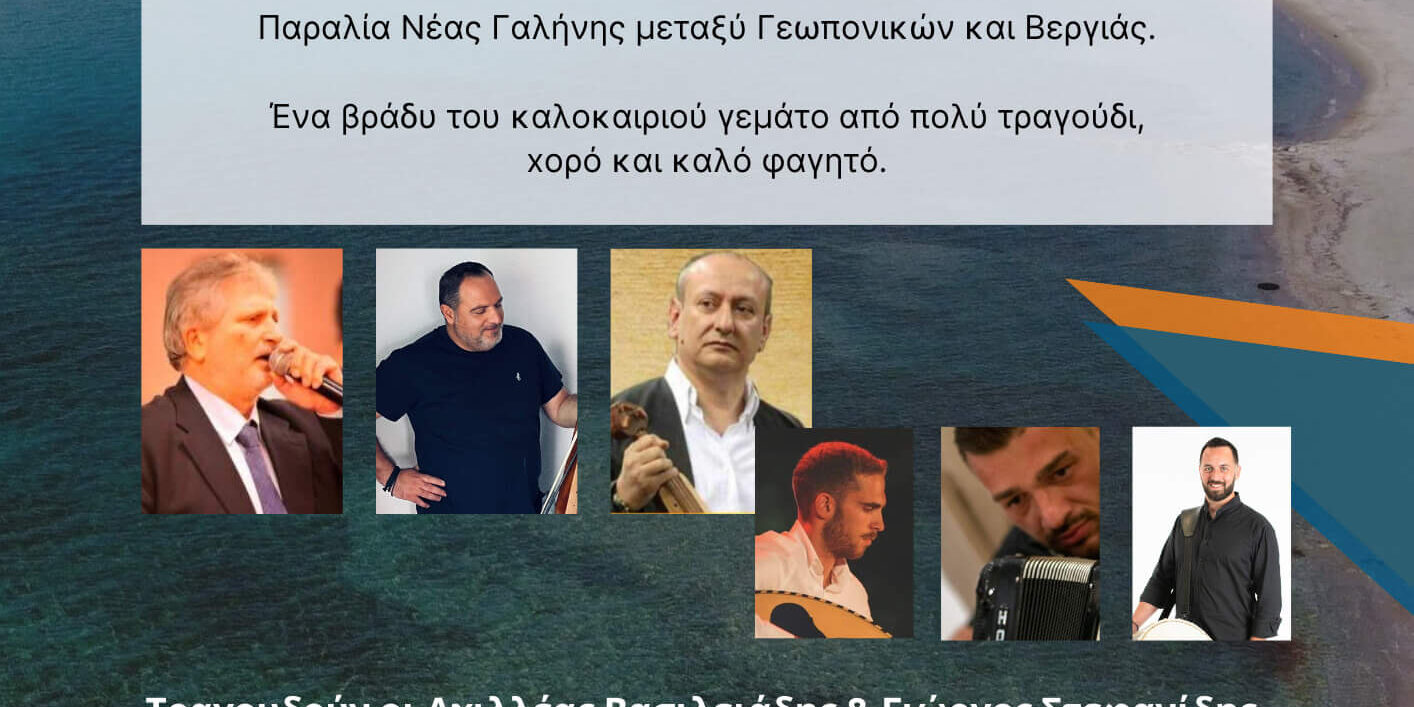
The press release of the cultural association “Nea Galini” informs us that in collaboration with the Municipality of Nea Propontida and the OPA, the 1st Cultural Festival of Nea Galini will take place on August 5th. It promises the visitors refugee sounds, good food and entertainment.
A Settlement has decided to re-establish itself, to present its “new dynamic identity” and among other things, it chooses to do it through the most traditional Greek way: a summer festival, which inextricably links the past, the present, the future.
Of course, what the “Nea Galini” club has been doing lately is unfair if we limit ourselves to the festival. There are actions that seek to change the image and fate of the Community, to shake off the heavy burden of the “arbitrary” and to find a developmental path in the new era.
The story goes back to almost 50 years ago, in the 70s and 80s, when thousands of arbitrary country houses were created in the area of Halkidiki close to Thessaloniki.
An informal “agreement” of silence – although it was known to everyone – covered this process that created dozens of Settlements with an image, with which most of us are familiar from some summer in the past:Houses small and rough, sometimes pre-fab and detached, water from boreholes, electricity… borrowed. The Greek family lived their summer dreams there, paying much more for them, without – in any case – this being an excuse for an illegal choice.
Over the years and the conscious choice of central and local authorities, the situation was “legalized” de facto. And today through the “settlement” and with the stamp of the law.
These houses have now been passed on to the second, even third generation. These generations are now struggling, having paid for the settlement in gold, to improve the conditions in the Settlements in question, which of course concerns them, but also the public space.The “arbitrary” became “arranged” and these settlements, in the new digital world, are looking for their new identity. What the association of “Nea Galini” does is admirable. First of all, in order not to create confusion to the visitors, as there are other locations with the same name, it was renamed: from “Galini” to “Nea Galini”, apparently in an attempt to mark the new direction of the place.However, in addition to the legal settlement of the houses, the most important thing is the legal settlement of the entire settlement: and they started from the basics: in collaboration with a surveyor and in accordance with urban planning rules, a digital map was created with new road markings based on its refugee character, so that all properties have a street and number included in its new identity.
This was followed by tree plantings, interventions for infrastructure on the beach, interventions with the local government on issues related to water supply and drainage, cleanliness and public space. Above all, significant efforts to change the status of “undivided” land and promote inclusion in the city plan.
When I was writing these lines on the occasion of the Association’s actions, even I thought: “they broke the law and now they are also asking for infrastructure and solutions”? But there is a decades-old reality, and today’s initiatives of the new generation of owners are aimed at regeneration, not perpetuation. At least that’s what I understood reading the activities of the Association.
When the state itself moves forward after years of, let’s say tolerance, in the choice of arranging these houses, then they must also be treated as such.
Vangelis Plakas